
Viewing 21 - 30 out of 32
We're currently updating our website. Thank you for your patience while we make improvements. Some content may still be in progress.
Veterinary Topics

Veterinary care is crucial and effective for a wide variety of conditions. The following is a partial list of some of the most common. If you do not see your pet's specific condition listed, we encourage you to give us a call so we can personally address your particular concerns.

Pet Health
Obesity
Excess weight is a serious health problem for dogs and cats and is common in many countries. The two main causes of obesity are too much food and too little exercise. Other contributing factors can be due to hormonal influences, certain genetic factors, and other disease processes. If you pet is carrying

Pet Health
Mites
There are many types of mites that infect dogs, cats, and other animals. Mites are microscopic arthropod parasites that, for the most part, infect the skin or mucous membranes. Mites can even be present on birds and reptiles. The most common mites that infect dogs and cats are ear mites, Demodex, scabies,

Pet Health
Heartworm
Heartworm has been diagnosed in dogs in all parts of the world and is actually very common. This may be due to the fact that heartworm has a virtual 100% prevalence rate in unprotected dogs living in highly endemic areas. Heartworm, also known as Dirofilaria immitis, is transmitted by mosquitoes. The

Pet Health
Gastric Dilation Volvulus (GDV)
Gastric Dilation Volvulus (GDV) is a life threatening, acute condition that requires immediate medical attention. Certain breeds are more prone to this condition: Boxers, Great Danes, Standard Poodles, Saint Bernards, Irish Setters, Dobermans, Weimaraners and Gordon Setters. These breeds are considered
Pet Health
Canine Parvovirus (CPV)
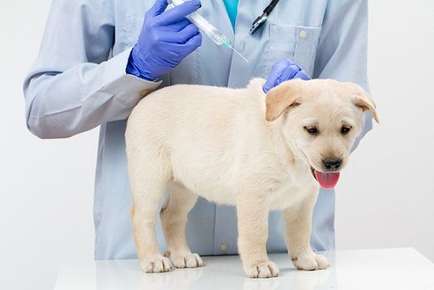
The Parvovirus is known worldwide and causes disease in many different species of animals. Different strains of virus only infect certain types of animals. For example, the Canine Parvovirus (Parvo) will mainly infect dogs and does not cause disease in cats or humans. Feline Parvovirus, a different strain

Pet Health
Cancer
Cancer, by definition, is the uncontrolled growth of cells. Any type of cells in the body can become cancerous. Once these cells grow out of control, they take over areas previously occupied by normal cells; sometimes these tumor cells break off and travel to other areas of the body. Wherever these cells

Pet Health
Fleas
A common parasite, fleas are found in almost every area of the world and can be found on dogs, cats, and many other mammals. They survive year to year even in cold climates because they live on pets, in buildings, and on wild animals. There are four stages to the flea life cycle. Eggs are laid by an

Pet Health
Hypothyroidism
Hypothyroidism is the natural deficiency of thyroid hormone and is the most common hormone imbalance of dogs. This deficiency is produced by several different mechanisms. The most common cause (at least 95% of cases) is immune destruction of the thyroid gland. It can also be caused by natural atrophy

Pet Health
Ticks
Ticks are the small wingless external parasites, living by hematophagy on the blood of mammals, birds, and occasionally reptiles and amphibians. Ticks are blood-sucking parasites that are often found in freshly mown grass, where they will rest themselves at the tip of a blade so as to attach themselves

Pet Health
Liver Shunt
A liver shunt is also named a PSS, portosystemic shunt, portacaval shunt or portosystemic vascular anomaly. This abnormality occurs when a pet's venous blood from the intestine bypasses the liver. In the normal pet, blood vessels pick up nutrients from ingested material in the intestine and carry it

Contact us